
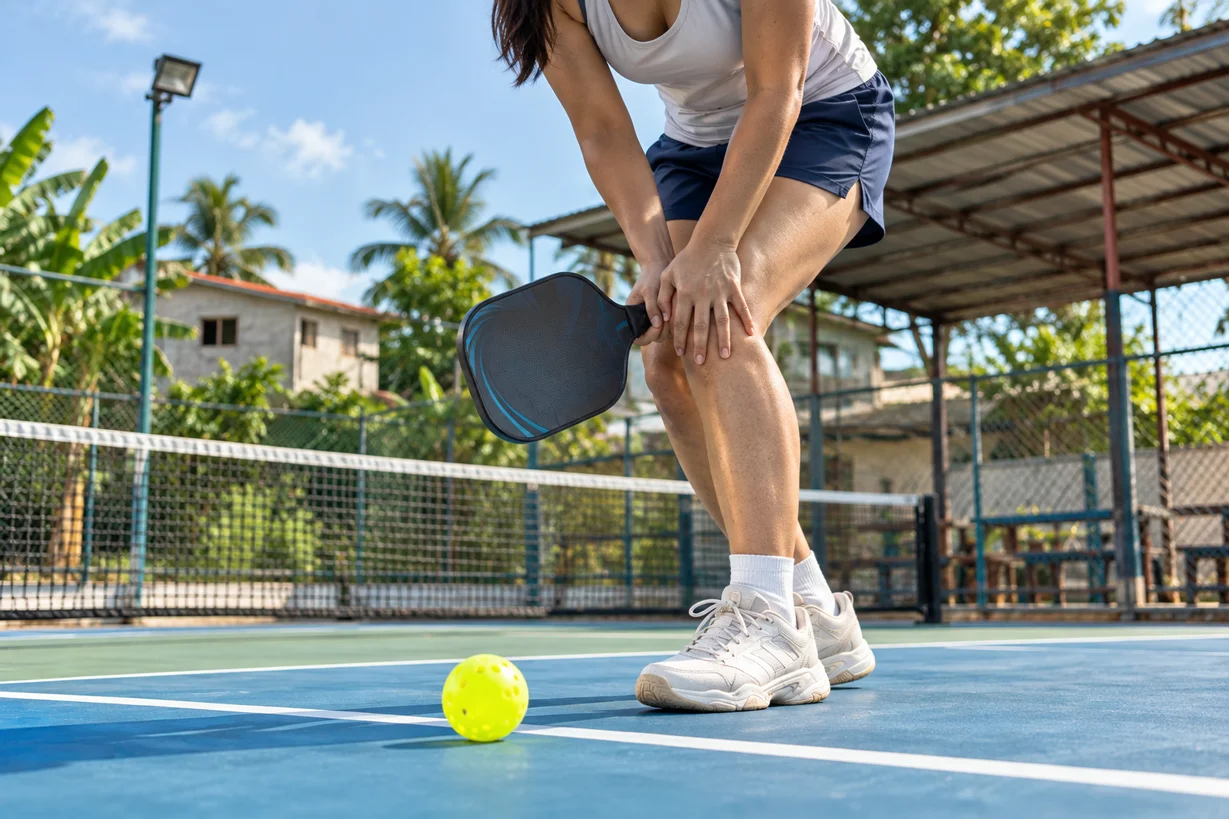
We have all been there. You play three consecutive matches, hit a couple of sweet winners, and walk off the court convinced you are an athletic marvel. Then the next morning arrives. You try to get out of bed, your calf seizes up, your right elbow aches when lifting your coffee mug, and your knees sound like bubble wrap. Grabeha sa pamaol, halos di na makatindog! (The soreness is so intense, you can barely stand!)
Pickleball looks gentle from the sidelines, but the sudden stops, lateral lunges, and repetitive wrist snaps can wreck your joints if you jump straight into a match cold. If you want to keep playing three or four times a week without needing a wheelchair by Friday, here is how to protect the three most vulnerable trouble spots:
- The Dreaded "Pickleball Elbow": Most beginners grip their paddle with a death grip—holding on as if someone is trying to snatch their wallet in a crowded jeepney. When you clench the handle at 100% tension, all the shock from the ball vibrates directly into your forearm tendons. Relax your hand to about a 4 out of 10 grip pressure. Swing using your core and shoulder rather than flicking your wrist on every contact.
- The Calves and Achilles Tendon: Pickleball requires constant forward lunging to reach drops at the kitchen line. Sprinting toward the net on cold muscles is how Achilles strains happen. Skip the old-school static stretching before the game; stretching cold muscles can actually cause tears. Instead, spend five minutes doing dynamic warm-ups: light jogging, butt kicks, calf raises, and side-to-side shuffles along the baseline before you hit a single ball.
- The "Kitchen Crouch" Knee Saver: When an opponent drops a soft shot into the kitchen, the instinct is to lean forward and bend entirely from your lower back, putting huge torque on your lumbar spine and knees. Instead, drop your hips into an athletic squat, keep your chest upright, and let your large quad muscles absorb the load.
When your session wraps up, do not just collapse immediately into your car seat. Take three minutes to walk it off, stretch your hamstrings and forearms while your body is still warm, and rehydrate properly with electrolytes or fresh coconut water.
Listen to your body. If a tendon feels sharp rather than just sore, give it a couple of days of rest instead of trying to play through the pain. Pahuway gamay (rest a bit), stretch those legs, and bawi lang ta sunod game!


![FREE LIGHT SNACKS OP ₱195|3Courts|3Hours|26P [All Levels]](/uploads/club_1789864370_867.webp)




![Monday Slices @ Slice District [3C • 3H • 24P]](/uploads/club_1790166347_884.webp)